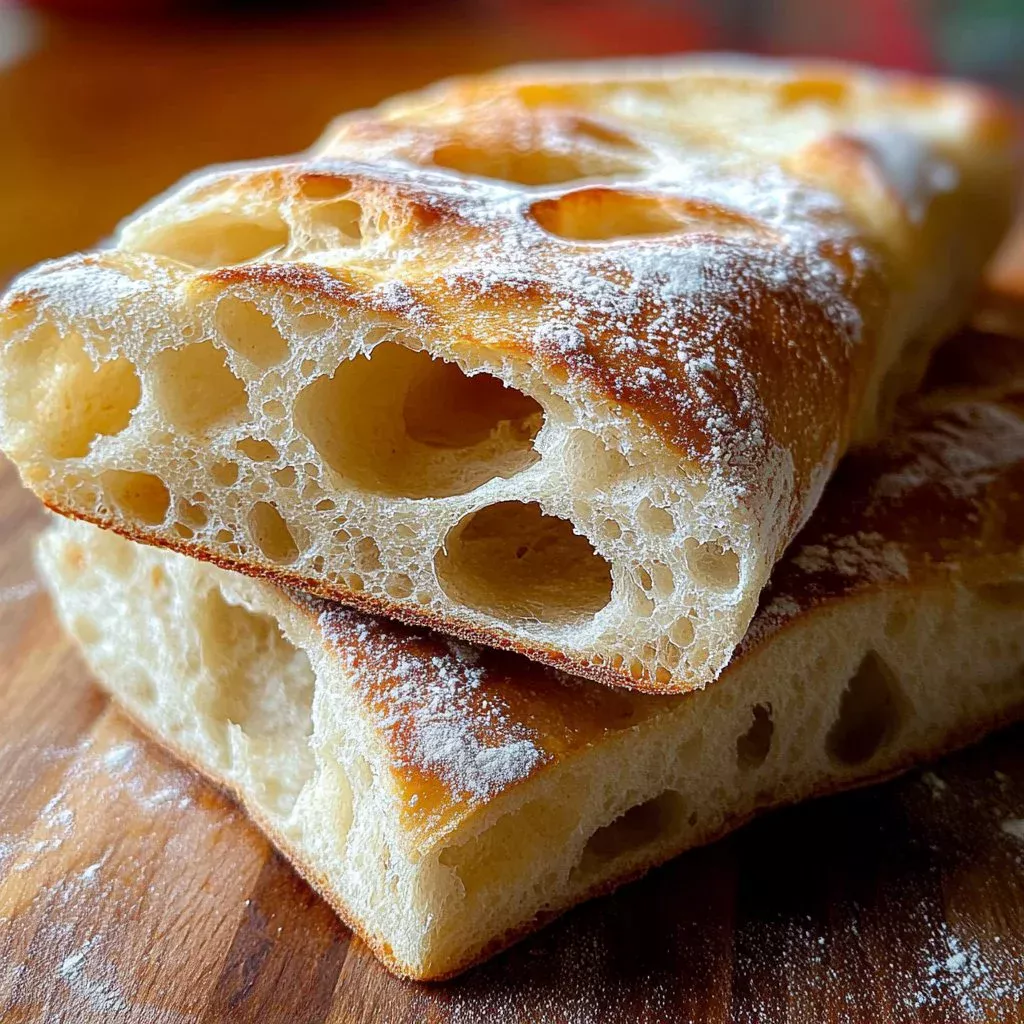
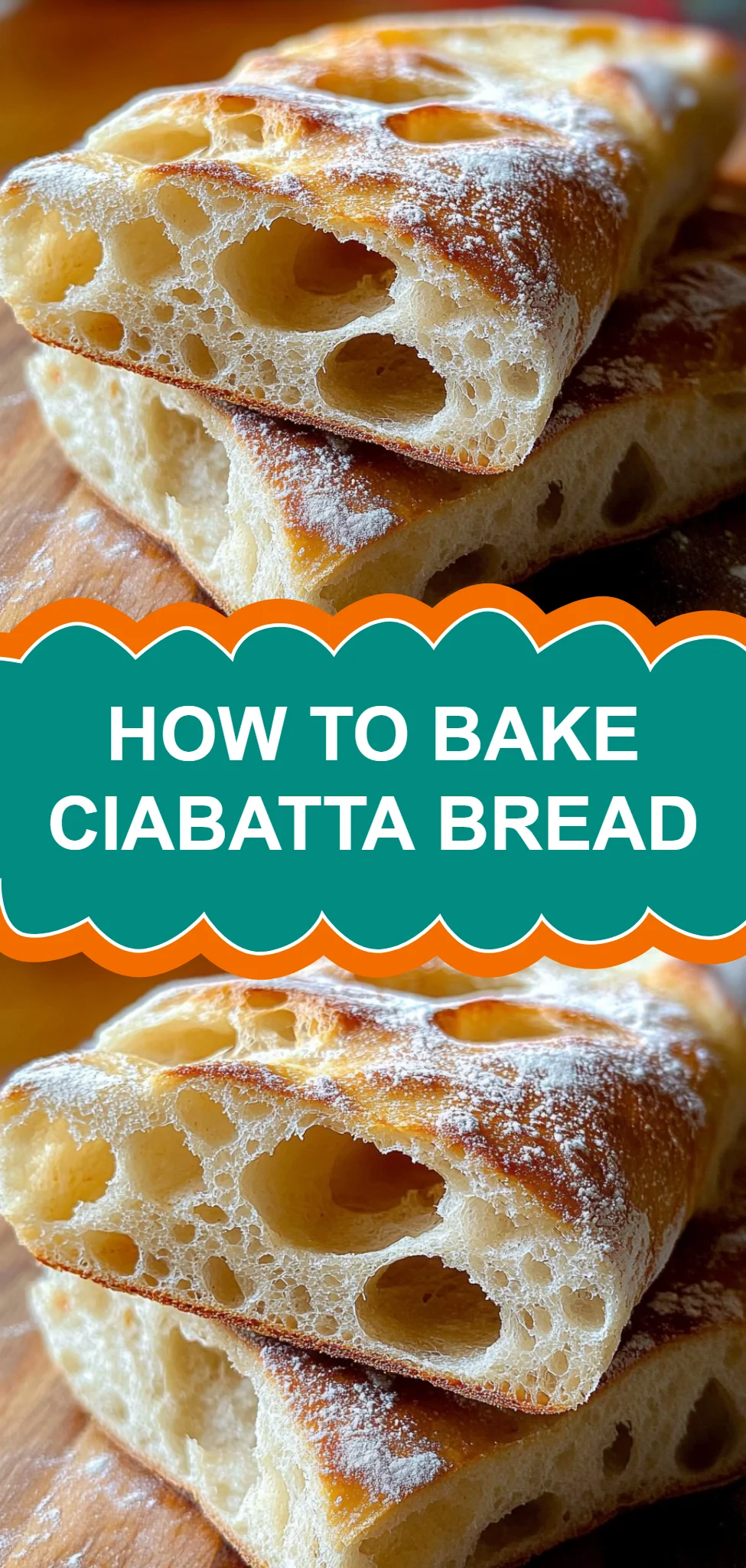
Homemade Ciabatta Bread is a delightful treat that captures the essence of traditional Italian baking. Its crispy crust and airy, tender inside make it an irresistible addition to any meal. The soft, chewy texture paired with the unique aroma wafting through your kitchen creates a warm and nostalgic atmosphere, reminiscent of sunny Italian markets. What’s remarkable about this recipe is its simplicity and the comfort it offers when made at home. Using just a few humble ingredients, you can create a delicious loaf that elevates sandwiches or serves as a perfect companion to your favorite soups. This step-by-step guide will navigate you through the process of creating your own ciabatta bread, making it easy for even novice bakers to follow along.
You will need the following ingredients to make your Homemade Ciabatta Bread: 420g (3 1/2 cups) of bread flour that brings a chewy texture, 400ml (1 2/3 cups) of room temperature water for the right hydration, 2 teaspoons of instant yeast (or active dry yeast) to help your dough rise beautifully, and 1 1/2 teaspoons of salt that enhances the flavor. An optional tablespoon of olive oil can be added for an extra richness and delightful crispiness in the crust. Each of these ingredients plays a vital role in crafting the perfect loaf, ensuring that your ciabatta is as aromatic and delicious as it is visually appealing.
When it comes to cooking time for Homemade Ciabatta Bread, you’ll find that it can be relatively quick or delightfully slow, depending on your approach. If you’re short on time, a quicker preparation can get you baking in about 2 to 3 hours, including rising time. However, taking your time through a slower rise process can deepen the flavors significantly, producing a more complex and delightful loaf. For success, here are some practical tips: ensure your water is at room temperature to activate the yeast properly, don’t rush the rising process, and don’t be afraid to use generous amounts of flour to prevent sticking.
Get ready for a fun cooking experience! Here are the step-by-step directions for making your Homemade Ciabatta Bread:
- In a large bowl, combine the bread flour, yeast, and salt, mixing them well to distribute the ingredients evenly.
- Add the water (and olive oil if using). Mix with a wooden spoon or your hands until you have a sticky, shaggy dough. It should feel wet and elastic.
- Cover the bowl with a clean kitchen towel or plastic wrap, allowing the dough to rise at room temperature until it doubles in size. This typically takes about 1 to 2 hours.
- After the dough has risen, wet your hands and gently stretch and fold the dough several times inside the bowl to build strength. Let it rest for an additional 30 minutes.
- Generously flour your work surface to prevent sticking, then carefully turn out the dough. Divide it in half, being gentle to keep the air bubbles intact.
- Shape each piece into a rectangle, taking care not to deflate the dough too much to preserve that tantalizing texture.
- Place the loaves onto a floured baking sheet. Cover them and let rise again for about 45 minutes to 1 hour, until they are puffy and a little jiggly.
- Preheat your oven to 450°F (230°C), putting a baking stone or steel inside if you have one. This helps achieve a fantastic crust.
- Bake the loaves for 20-25 minutes, or until they are golden brown and crisp on the outside.
- Allow the bread to cool on a wire rack before slicing and serving, filling your home with a mouth-watering aroma.
Serving Homemade Ciabatta Bread can be a delightful experience, accenting a variety of dishes. Great for sandwiches, it pairs beautifully with fresh tomatoes, basil, and mozzarella for a Caprese delight. You can also serve it alongside soups or stews, allowing the bread to soak up those mouth-watering flavors. Consider serving it during family gatherings, picnics, or even just as a comforting treat on a cozy evening.
While the recipe is straightforward, there are common mistakes to avoid while making Homemade Ciabatta Bread. Firstly, be cautious not to over-knead or overwork the dough; this may result in a denser bread. Secondly, ensure you’re using the correct flour type—bread flour, with its higher protein content, is ideal for achieving that coveted chewyness. Lastly, don’t skimp on the rising times; patience is key for that airy texture.
For those looking for healthier alternatives, there are a few variations to consider. You can substitute part of the bread flour with whole wheat flour for added nutrients and fiber. Additionally, using a variety of seeds or herbs in the dough can create a unique flavor while enhancing the loaf’s nutrition. If you’re avoiding gluten, consider using gluten-free flour, although the texture may differ without gluten’s elasticity.
Here are some FAQs to help you with your Homemade Ciabatta Bread journey:
Can I use all-purpose flour instead of bread flour?
Yes, but the texture will be slightly different—less chewy and more tender.Is it necessary to use a baking stone?
No, but it helps achieve a crispier crust. You can bake on an ordinary baking sheet.How should I store leftover bread?
Keep it in an airtight container at room temperature for up to two days or freeze for longer storage.Why is my bread dense?
It may not have risen enough or you might have used too much flour during kneading.Can I make the dough ahead of time?
Yes, you can make the dough and refrigerate it for up to 24 hours for a slower rise.How do I know when my bread is done baking?
The bread should be golden brown, and tapping the bottom should sound hollow.
Homemade Ciabatta Bread is a culinary adventure that’s sure to elevate your baking skills and fill your home with heartwarming scents. With its rustic look and incredible flavor, there’s no reason to wait! Embrace the joy of baking today, and experience the delightful satisfaction of serving your very own ciabatta at the dinner table. Don’t hesitate—get started on this delicious journey right now!
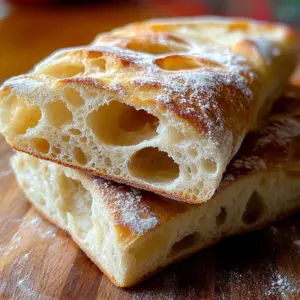
Homemade Ciabatta Bread
Ingredients
Main Ingredients
- 420 g bread flour For a chewy texture
- 400 ml room temperature water For proper hydration
- 2 teaspoons instant yeast Or active dry yeast
- 1.5 teaspoons salt Enhances flavor
- 1 tablespoon olive oil Optional for extra richness
Instructions
Preparation
- In a large bowl, combine the bread flour, yeast, and salt, mixing them well.
- Add the water (and olive oil if using) and mix until you have a sticky, shaggy dough.
- Cover the bowl with a clean kitchen towel or plastic wrap, and let the dough rise at room temperature until it doubles in size, about 1 to 2 hours.
- Wet your hands and gently stretch and fold the dough inside the bowl to build strength, then let it rest for an additional 30 minutes.
- Generously flour your work surface to prevent sticking, and turn out the dough.
- Divide the dough in half, gently shaping each piece into rectangles.
- Place the loaves onto a floured baking sheet, cover them, and let rise for about 45 minutes to 1 hour.
Baking
- Preheat your oven to 450°F (230°C) with a baking stone inside if you have one.
- Bake the loaves for 20-25 minutes, until they are golden brown and crisp on the outside.
- Allow the bread to cool on a wire rack before slicing and serving.